Background
In the steep, rugged ridges of the Gandaki Rural Municipality, the path to a clinic is often more than a physical trek—it is a test of faith. For the Chepang community living in the shadows of these mountains, the distance between a village and a medical facility isn’t just measured in kilometers, but in the “Trust Gap.” This gap is the silent chasm where modern medicine exists on paper, but local families choose the familiar, albeit expensive, private pharmacies in the market over the government’s promise of free care.
Historically, the Prajabasti Community Health Unit (CHU) in Beltar stood as a quiet sentinel that few visited. Despite offering essential services, it was bypassed by those it was meant to serve. When a child fell ill or a woman became pregnant, the instinct was to avoid the government facility, fearing a lack of quality or facing social barriers that made the clinic feel like a world away. This disconnect meant that mothers were missing critical prenatal windows and children were growing up without the most basic health monitoring.
Closing this gap required more than just keeping the doors open; it required a radical reimagining of how health is delivered. By partnering with the local government, the Tara Namaste Foundation didn’t just fund a clinic—they championed a shift in community psychology. Through a series of small, localized innovations, they began to turn the Prajabasti CHU into a trusted pillar of the community, proving that sometimes, the road to a health revolution is paved with simple, tangible gestures.
The High Price of a “Free” Pregnancy Test
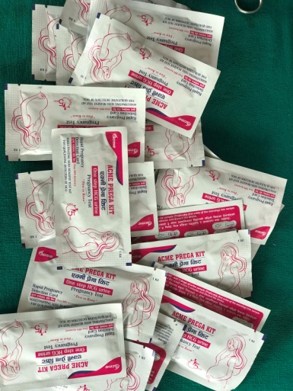
For a subsistence farmer in the Chepang community, the word “free” can be a deceptive myth. Previously, for a woman to confirm a pregnancy, she had to endure a grueling journey to a distant facility and pay approximately NPR 150 for a test kit. When you factor in the cost of travel and the loss of a day’s labor, that “free” government care at the end of the road felt prohibitively expensive. Consequently, most women didn’t seek care until the very end of their term, arriving at the clinic only when it was time to give birth.
By localizing free pregnancy test kits at the Prajabasti CHU, the Foundation removed the financial and logistical gatekeepers of prenatal care. The impact was immediate: women began confirming their pregnancies in the first month. This early entry point allows the health system to provide nine months of support rather than a single day of crisis management. It reveals a vital global health truth: to make a service accessible, you must first eliminate the “hidden costs” that make the marginalized stay home.
Salt as a Life-Saving Incentive
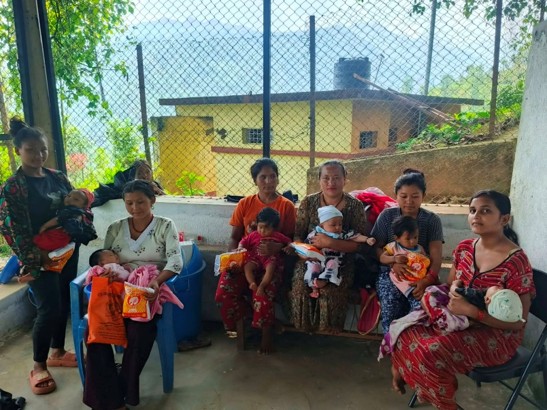
Routine is the bedrock of health, yet in remote regions, convincing a healthy-feeling person to attend a “check-up” is a difficult sell. To bridge this, the initiative pivoted to a brilliant, localized incentive: one kilogram of iodized salt. Each month, mothers who attend their regular antenatal care (ANC) check-ups or bring their children under the age of two for growth monitoring receive this essential household staple.
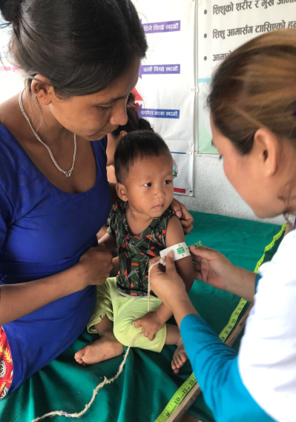
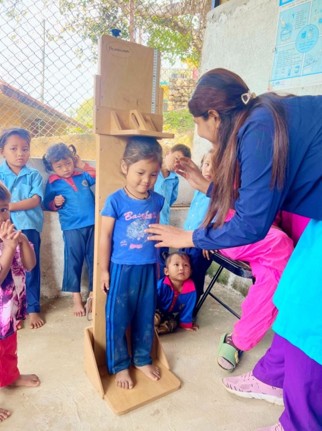
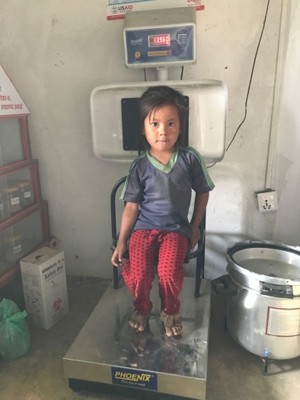
While the salt itself is a nutritional necessity, its primary power is psychological. It transforms a medical appointment into a rewarding community habit. These visits allow health workers to use weighing machines to track a child’s growth, catching the first whispers of malnutrition before they become a roar. By using a small, tangible reward, the program has successfully shifted health-seeking behavior from reactive to preventive, ensuring that the health of the next generation is tracked one kilogram of salt at a time.
The “Poshan Nanglo” (Nutrition Tray) Approach
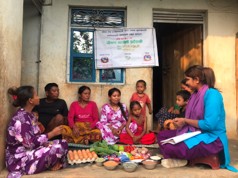
The “Poshan Nanglo” or Nutrition Tray program represents a masterclass in culturally familiar healthcare. Designed for women in their first four months of pregnancy and the first week after childbirth, the program uses the Nanglo—a traditional, flat woven tray—as a vessel for health education. Instead of importing sterile, foreign nutritional supplements, the tray is filled with the promise of local foods, kitchen gardening tips, and breastfeeding education.
The symbolism of the Nanglo is intentional; it signals that health does not have to be an external “gift” from an NGO but can be grown in one’s own backyard. By encouraging families to improve their kitchen gardens to grow green vegetables, the program ensures sustainability. It moves the conversation from “what we can give you” to “what you can cultivate,” turning a simple household item into a powerful tool for long-term nutritional independence.
Why Hygiene Kits Build Medical Trust
Building legitimacy in a medical facility often starts with addressing the most basic, non-medical needs of a family. The Foundation recognized that to get people through the clinic doors, they needed to provide items that improved daily life immediately. They began distributing support materials that included soap, shampoo, baby diapers, body lotion, sanitary pads, toothbrushes, toothpaste, masks, nail cutters, and—crucially—the weighing machines needed for growth monitoring.
These kits serve as “entry points” for skeptical families. A mother might visit the Prajabasti CHU for a bar of soap or a nail cutter, but once inside, she is introduced to a nurse, a vaccine, or a growth chart. These non-medical items act as the social glue that binds the community to the health system. It is a counter-intuitive but essential lesson: medical engagement is often won not through a stethoscope, but through a toothbrush or a clean diaper.
Voice from the Frontlines
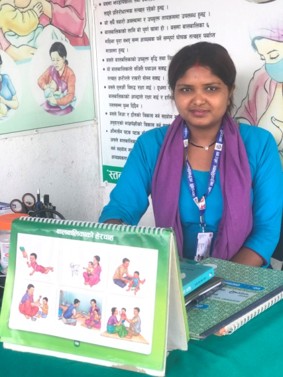
The transformation of the Prajabasti unit is best understood through the eyes of those standing on its frontlines. Ms. Rima Mundel, the In-charge of the Community Health Unit, has witnessed the shift from empty halls to a bustling center of care:
“I joined the Community Health Unit about five months ago. At that time, very few people came to the health facility. After working closely with the Tara Namaste Foundation and implementing activities such as free pregnancy testing, iodized salt distribution, and the Poshan Nanglo Program, we have seen a significant increase in the number of Chepang families visiting the health facility. More pregnant women and other community members are coming for regular health check-ups, and more parents are bringing their children under two years of age for monthly growth monitoring. I believe these activities have improved the community’s health, nutrition, and health-seeking behaviour. The Foundation’s close coordination with the Community Health Unit has made it easier to work with the community and has greatly strengthened the quality of our health services.”
The Paradox of the “Missing Medicine”
However, the journey to total community trust faces a fragile paradox. While the Government of Nepal provides 98 types of essential medicines for free at the Prajabasti CHU, there is a glaring absence of the most common treatments: cough and cold syrup for children and adults. In a remote mountain village, these “minor” ailments are the most frequent reason a parent seeks help.
When a mother makes the trek to the clinic only to find there is no syrup for her child’s cough, the facility’s credibility takes a massive hit. To the community, it doesn’t matter if the clinic has 98 other drugs; if it cannot treat a simple cold, how can it be trusted with a complicated pregnancy? This “legitimacy gap” reminds us that a health system is only as strong as its ability to treat the uncomplicated. For the Chepang families, the availability of basic cough medicine is the metric by which they judge the entire government health system.
Conclusion: Beyond the Clinic Walls
The success at the Prajabasti Community Health Unit in Gandaki Rural Municipality is a testament to the power of coordination over mere funding. By removing the financial barriers to diagnostics, providing culturally resonant incentives, and focusing on the small tools of hygiene, the Tara Namaste Foundation and the local government have fundamentally changed the health landscape for the Chepang community.
This transformation suggests that the most persistent global health gaps aren’t always solved by massive infrastructure or high-tech breakthroughs. Instead, they are bridged by the small, localized interventions that address the human element of medicine. It leaves us with a compelling question: If a packet of salt and a woven tray can reclaim the health of a mountain community, what other “small” solutions are we overlooking in our quest to heal the world?